Why the ROG Dominus Extreme VRM Will Basically Last Forever
I’ve owned a few of these boards now. Flipped my first one for $300, brought a dead one back with a CMOS button, fought the DIMM.2 slots over RAM thermals. And the more time I spend with the ROG Dominus Extreme, the more I keep landing on the same thought:
The VRM on this board is never going to die. Not “probably fine.” Not “should last a while.” It is so far over-engineered for what it actually has to do that, barring a manufacturing defect or me dropping a wrench across the phases, the power delivery will outlive the rest of the board, the CPU, and most likely me.
Let me show you why.
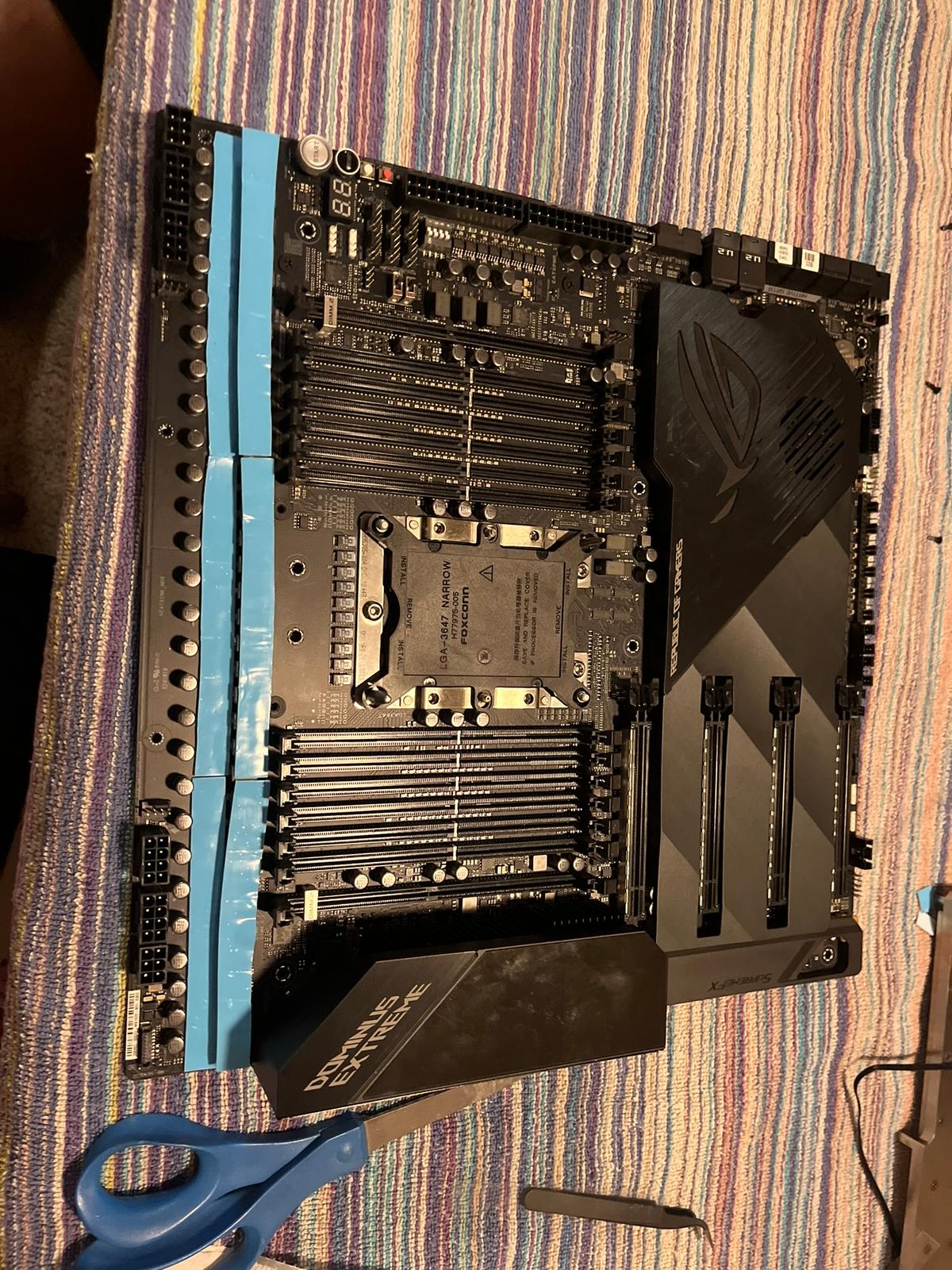
That’s the bare VRM from when I was prepping one for an EKWB block. Thermal pads laid over the phases, scissors out. Look at how far that power delivery array runs down the left edge of the board. That’s not a normal motherboard VRM. That’s a power supply that happens to be soldered to a motherboard.
What’s actually on there
ASUS built the Dominus Extreme power delivery out of 32 IR3555 PowIRstages — Infineon’s (International Rectifier) integrated stages. Each one of those is rated to handle 60 amps. Each stage gets its own high-permeability alloy-core choke rated for 40 amps. Thirty-two of them, lined up down the side of the board.
And these aren’t doubled phases. ASUS ran them teamed in direct parallel — no phase doublers sitting in the middle adding latency and a failure point, just 32 real stages sharing the load directly. ASUS rated the whole thing for over 570 amps sustained, with active fans buried in the VRM heatsink that don’t even spin up until the array crosses 30°C.
Stack that up:
- 32 stages × 60A = 1,920 amps of theoretical stage capacity
- Rated for 570A+ sustained as a complete system
- Active cooling that mostly sits idle
Now here’s the part that matters.
The CPU can’t stress it
The chip this board exists for is the Xeon W-3175X — 28 cores, and a part that’ll pull around 400 watts under a real load. That sounds like a monster, and it is. But run the actual current through this VRM and the picture flips.
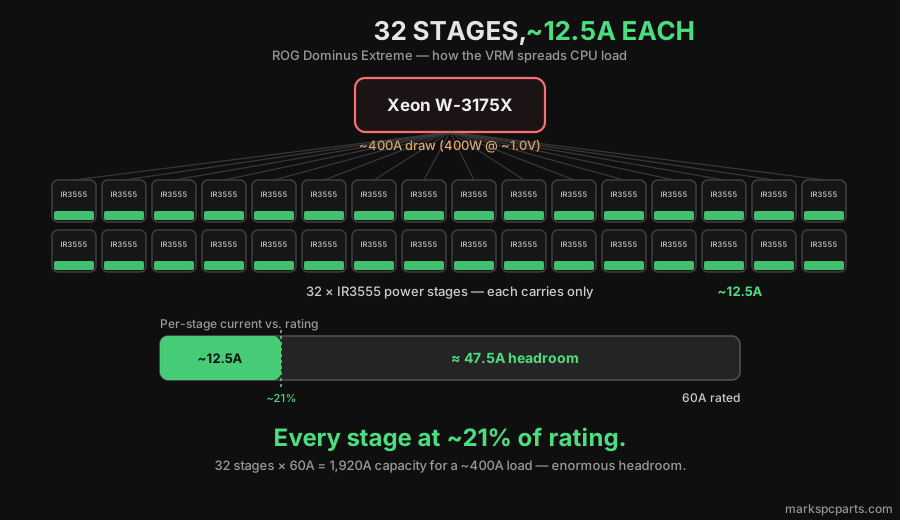
At roughly 1.0V core voltage, 400 watts is about 400 amps going into the socket. Spread that across 32 teamed stages and each one is carrying around 12.5 amps.
Each stage is rated for 60 amps.
So at full stock load — the kind of load that makes the W-3175X scream and the AIO work — every power stage on this board is sitting at roughly 21% of what it’s rated for. Even if you push the board to its own 570A sustained ceiling, that’s still only ~18A per stage. Under 30% of rating, across the entire array, all the time.
Why “barely loaded” means “basically immortal”
Here’s the thing people miss about VRM longevity. The two things that actually kill power delivery over time are heat and thermal cycling — components getting hot, expanding, cooling, contracting, over and over, until a solder joint fatigues or a stage cooks itself.
Heat in a power stage scales with the square of the current through it (I²R). So running a stage at 12.5A instead of its rated 60A doesn’t make a little less heat — it makes almost none.
(12.5 / 60)² ≈ 0.043
Each stage is producing somewhere around 4% of the heat it would make if you ran it at its rating. Four percent. That’s why the VRM fans on this board basically never have a reason to spin. There’s nothing to cool. The array barely warms up because no individual piece of it is doing any real work.
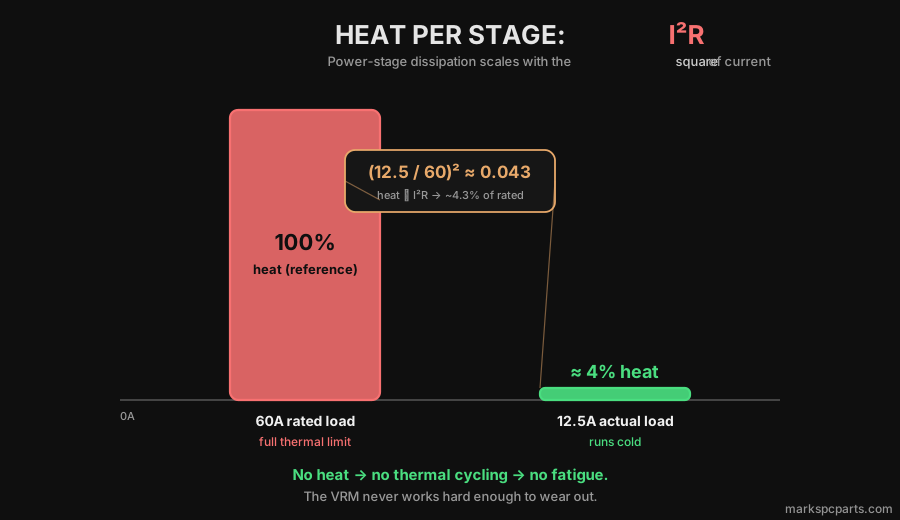
A VRM that never gets hot doesn’t thermally cycle. Components that don’t thermally cycle don’t fatigue. Solder joints that don’t fatigue don’t crack. The whole failure chain that takes out normal motherboards over years of use just… doesn’t get started here. The Dominus VRM is running a permanent victory lap.
The input side is equally ridiculous
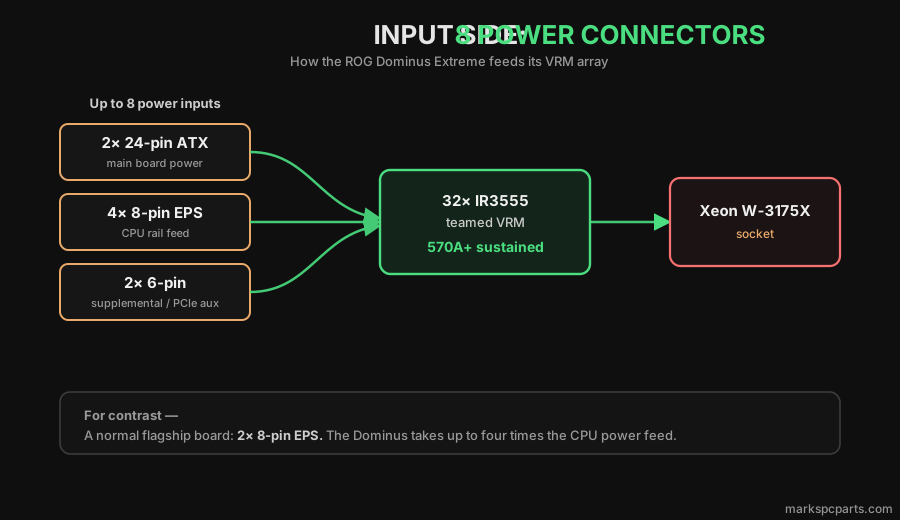
It’s not just the output stages. Look at what ASUS gave this thing to feed those 32 phases:
- Dual 24-pin ATX connectors
- Quad 8-pin EPS connectors
- Dual 6-pin supplementary
That is a genuinely absurd amount of input copper for a single-socket board. Most flagship boards today give you two 8-pin EPS and call it a day. This board wants up to eight power connectors because ASUS designed the input rails to never be the bottleneck either. The whole power path, input to output, is built like a substation that wandered into an ATX case.
And nothing current matches it
This is the part that gets me. You can’t go buy a board like this anymore. Not a newer one. Not a better one.
The Dominus Extreme is 14 inches by 14 inches — bigger than the E-ATX boards that sit at the top of every current lineup. I work at Pizza Hut, so I’ll give it to you in units I actually know: that’s the exact footprint of a large hand-tossed. Fourteen by fourteen. You could box this motherboard in a pizza box and it would fit like it was made for it. It runs 12 DIMM slots, a full 32-stage teamed VRM, eight power inputs, and a socket built for a 28-core workstation chip, all on one slab of PCB that barely fits in normal cases. When I lay it on the bench next to anything modern, the modern board looks like a model of itself.
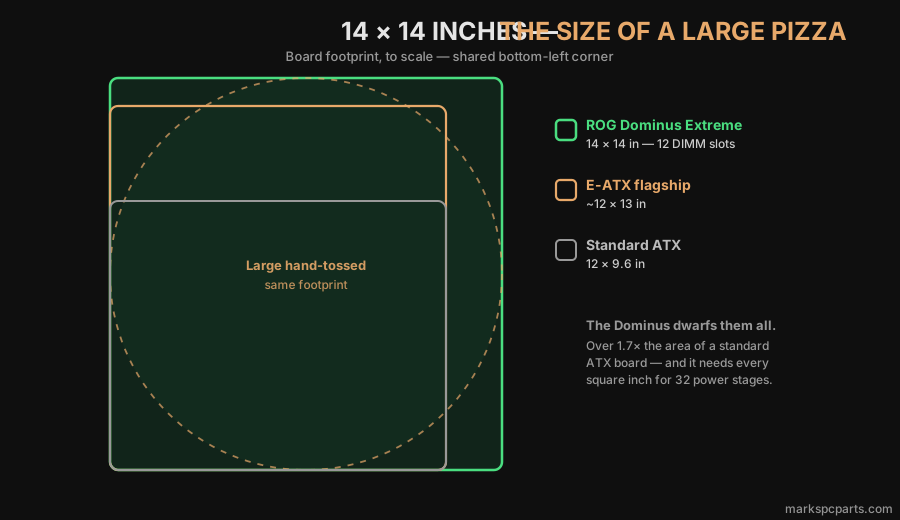
Current flagship boards are built for chips that pull more power than ever, sure — but they’re built to the edge of what their VRM can handle, because that’s how you hit a price. The Dominus was built for a one-off $3,000 Xeon halo platform where ASUS clearly stopped caring about cost and just kept adding phases until the board ran out of room. Nobody’s going to make that board again. There’s no W-3175X successor, no consumer-ROG reason to put 32 teamed stages and eight power plugs on one motherboard.
So what’s left is this: a board with power delivery so overbuilt for its own CPU that it operates its entire life at a fifth of its capacity, never gets hot, never cycles, and will keep posting long after everything around it has aged out.
The VRM isn’t going to be what kills a Dominus Extreme. Nothing about it is even working hard.
ROG Dominus Extreme — 32× IR3555 teamed power stages, 60A each, 570A+ sustained, fed by dual 24-pin / quad 8-pin / dual 6-pin inputs, driving a W-3175X that pulls 400 watts at ~12A per phase.
From Marks Finds
- ASUS ROG Dominus Extreme — Motherboard
- Intel Xeon W-3175X — CPU