I Downgraded to a Vega 64 LC for $200 and I'd Do It Again
July 2023. I was running a 5700 XT and I knew exactly what I was about to do was stupid.
The PowerColor Vega 64 LC showed up for $200 and I couldn’t stop thinking about it. Not because it was faster — it wasn’t. The 5700 XT beats it in basically every benchmark that matters. I knew that going in. I pulled the trigger anyway, purely on aesthetics and the pull of HBM.
The Box
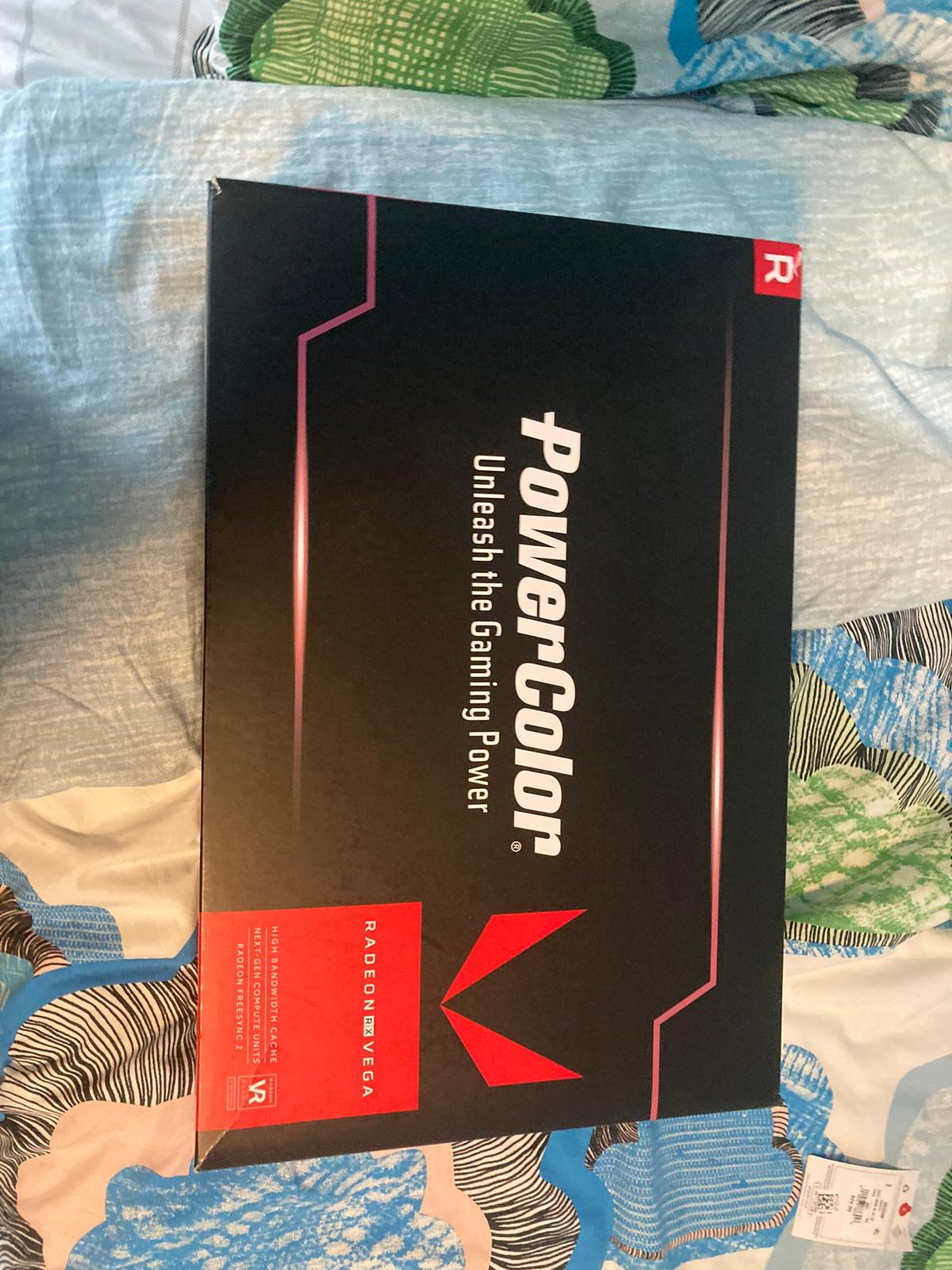
PowerColor shipped this card in a proper box. Nothing subtle about it — “Unleash the Gaming Power” across the front, full Radeon Vega branding, the red K logo. For a $200 used card it arrived looking like it came from somewhere important.
Unboxed
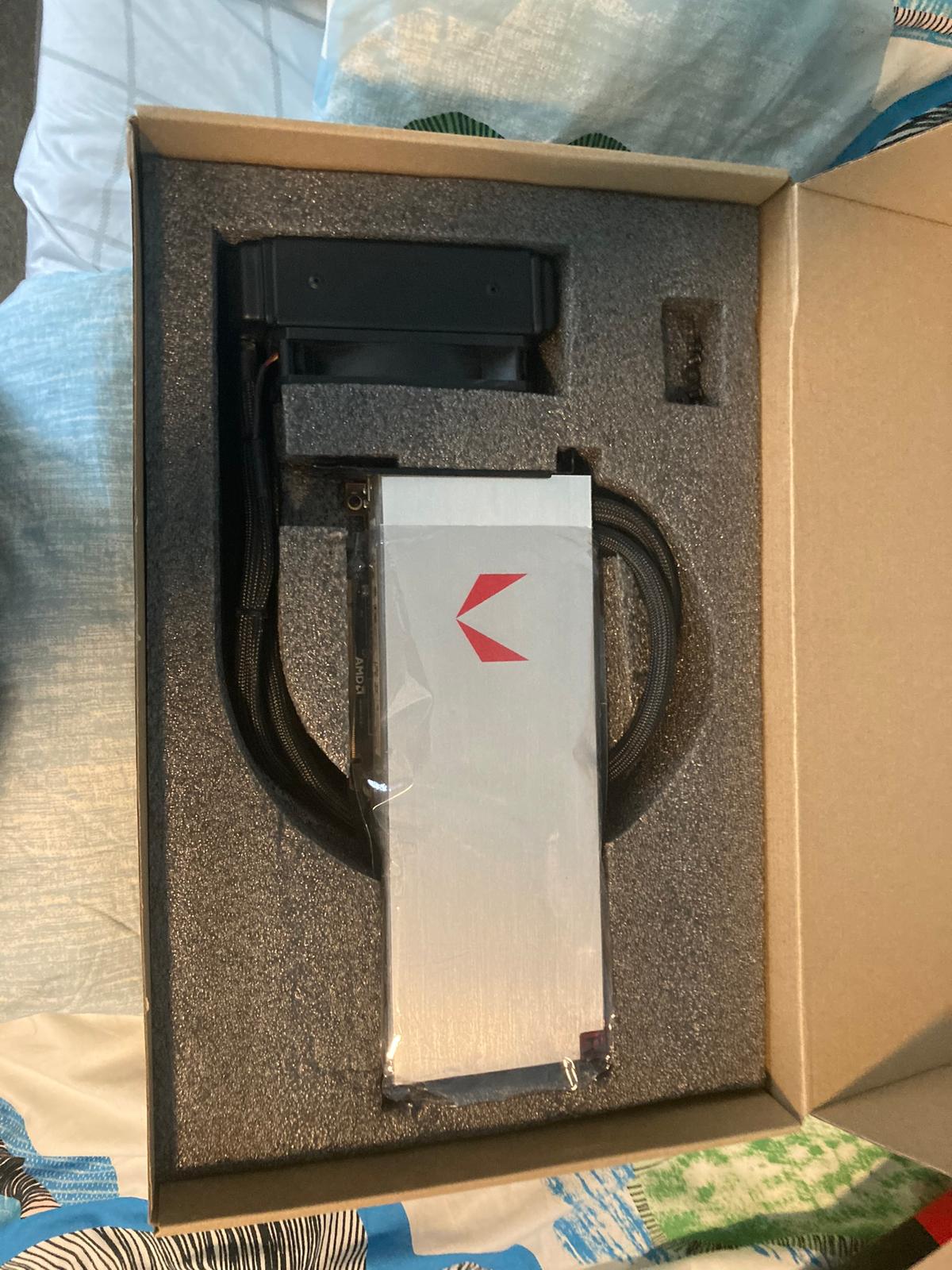
This is the LC variant — factory liquid cooled, AIO included in the box. Instead of a traditional heatsink and fan setup, PowerColor shipped the Vega 64 LC with a 120mm AIO attached directly to the GPU die from the factory. The silver shroud, the pump head sitting in the foam, the braided tubing — it looks like nothing else from that era.
That’s why I bought it. That thing is beautiful.
In the Build
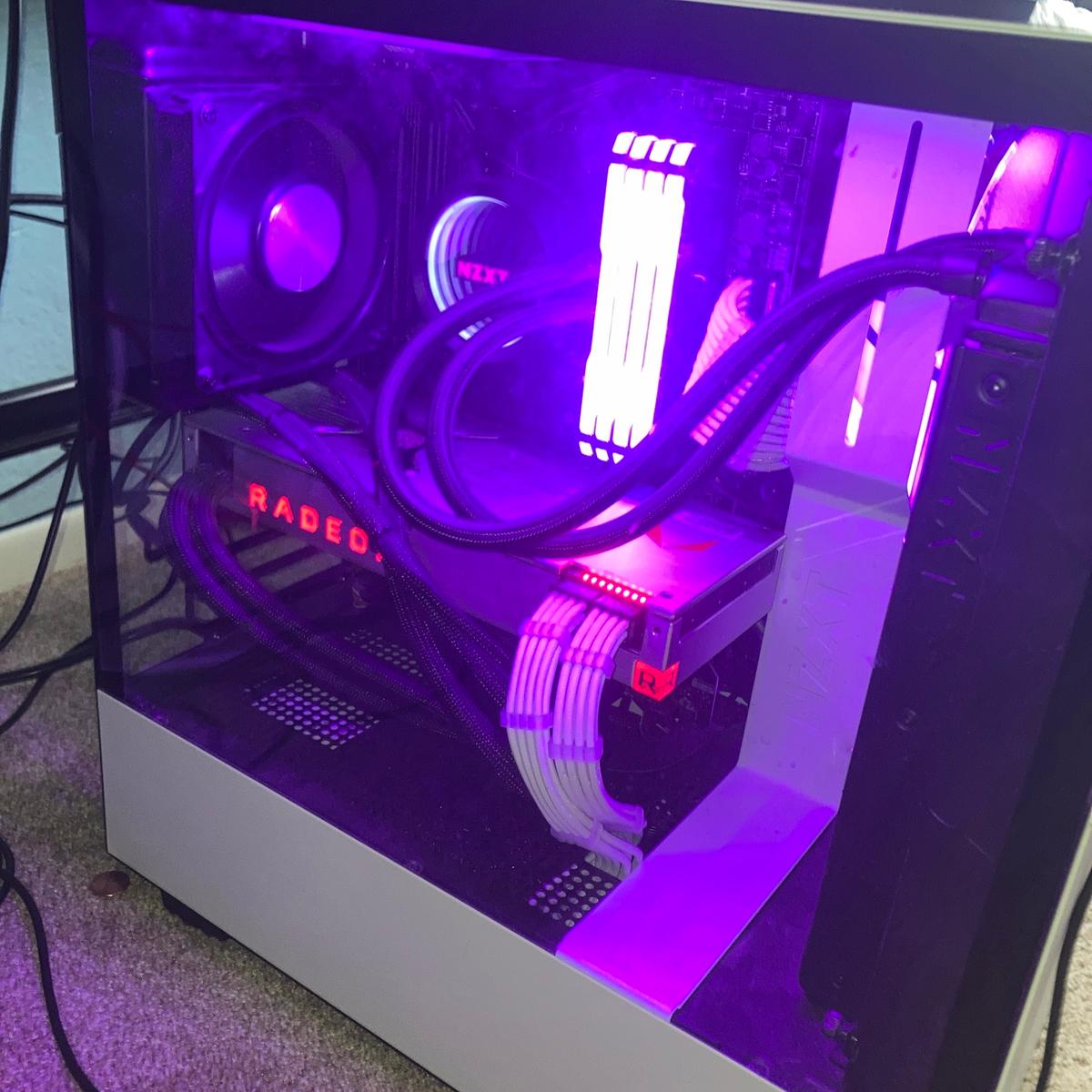
Dropped it in and it looked exactly as good as I hoped. The RADEON logo lights up, the whole platform sits in the purple RGB, and the factory AIO blends right in with the rest of the cooling setup in the case.
Then I started actually using it.
The Heat
The Vega 64 LC is a space heater disguised as a graphics card.
AMD’s Vega architecture was already power hungry, and the LC variant doesn’t really solve that — it just moves the heat off the GPU die faster. The VRMs, the HBM stacks, everything else is still putting out serious wattage, and it all has to go somewhere. That somewhere was my room.
Five degrees Fahrenheit. My room got measurably warmer running this card under load. Not in an uncomfortable way — I’m in the IE, I’ve built up a tolerance — but it was real and it was constant.
The HBM Part
This is still what gets me about Vega. HBM2 sitting right there on the package, absurd bandwidth for a consumer card. By 2023 it was already a generation behind and the performance numbers showed it, but the architecture is genuinely interesting. Same lineage as the Vega 56 Strix, same reason I keep coming back to these cards. I wrote up the full HBM history if you want the whole arc from Fiji onward. The same Vega 10 die also had a server life — AMD put two of them on one passive PCIe card for the enterprise market, the Radeon Pro V340L, which ended up running in Google Stadia’s infrastructure before finding its way into homelabs.
Fast memory on consumer silicon is cool. It was cool in 2017 and it was still cool when I dropped $200 on one six years later.
The Honest Take
This was a downgrade. I went from a 5700 XT — a modern RDNA card with better performance, better drivers, better efficiency — to a Vega 64 that runs hotter, draws more power, and loses in most benchmarks.
I knew that.
The LC aesthetic, the HBM, the factory AIO, the way it looks in a build — none of that shows up in a benchmark. But it showed up every time I looked at my desk.
No regrets.
PowerColor Vega 64 LC — HBM2, factory AIO, $200, July 2023. Technically a downgrade. Raised the room temperature by 5°F. Still worth it.
From Marks Finds