The Water Block That Was Never Sold in America
The bundle arrived from a seller in Washington state who’d picked it up from a local pawn shop. An ASUS ROG Rampage V Extreme, an Intel Core i7-6950X, and a full-cover water block already mounted on the board — all three in one listing.
The board showed POST code 53 on arrival. Memory initialization failure. I negotiated a partial refund assuming the worst and moved on to other projects.
Weeks later I borrowed a known-good DDR4 stick from my brother’s machine, noticed the Slow Mode switch was engaged, flipped it off, slotted the RAM, and the board came up immediately. Straight into UEFI. Completely healthy. The whole story on that diagnosis is in the Rampage V Extreme revival post — the short version is the board was never broken. My own dead test kit and one overlooked switch made it look like a paperweight.
But this post isn’t about the board.
It’s about what I found when I pulled the water block off.
The Block That Shouldn’t Be Here
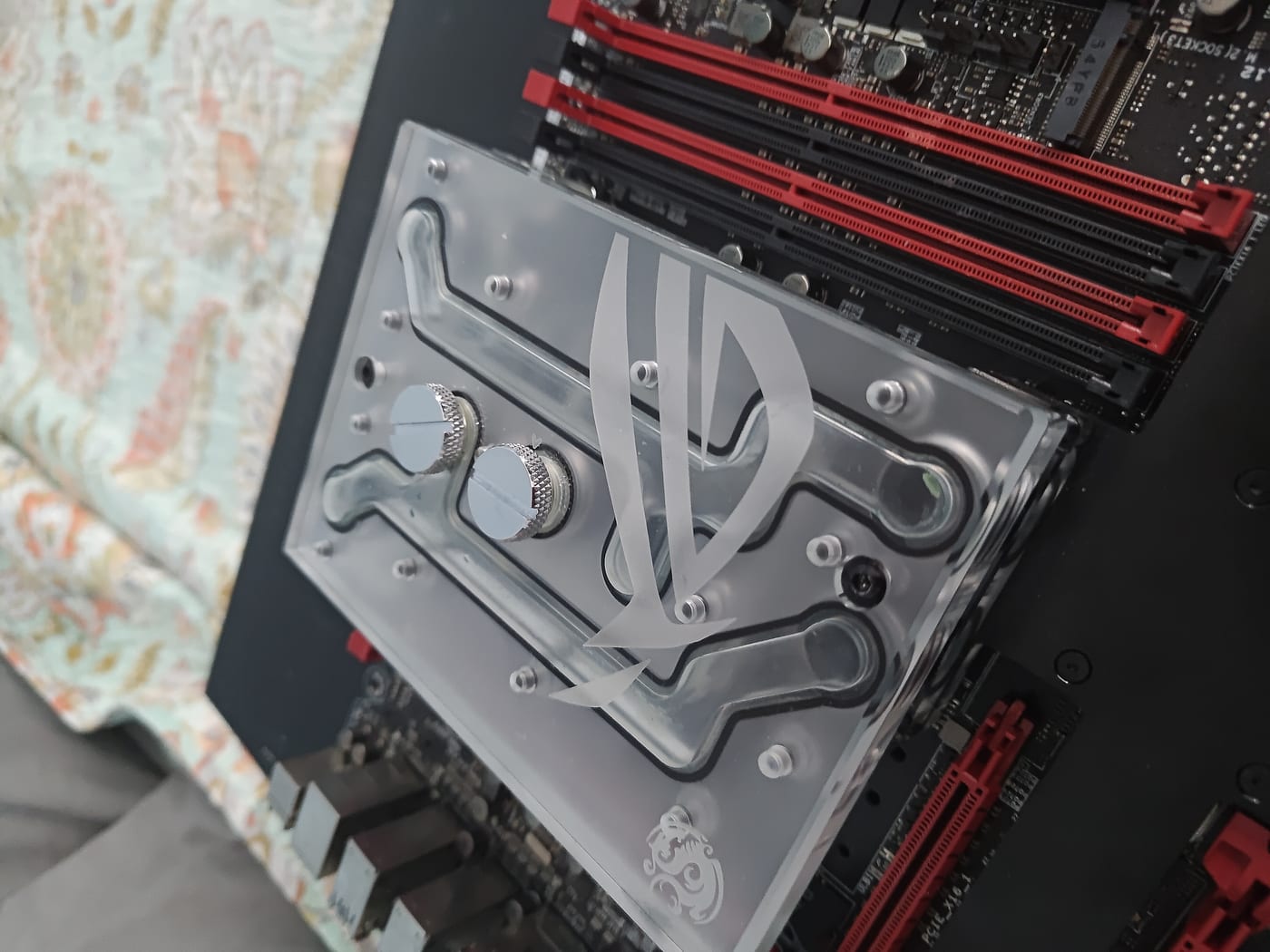
When I lifted the block off to repaste the CPU, I got my first real look at it. It wasn’t a generic third-party piece.
“ROG CERTIFIED” is engraved into the clear acrylic top. Engraved into the metal.
This wasn’t a random compatible block. This was a purpose-built, officially sanctioned collaboration piece. I identified it as the Bitspower ROG Certified Rampage V Extreme Full Cover Block, clear variant, model BP-ROGCR5EFCB. It’s designed exclusively for this board and nothing else.
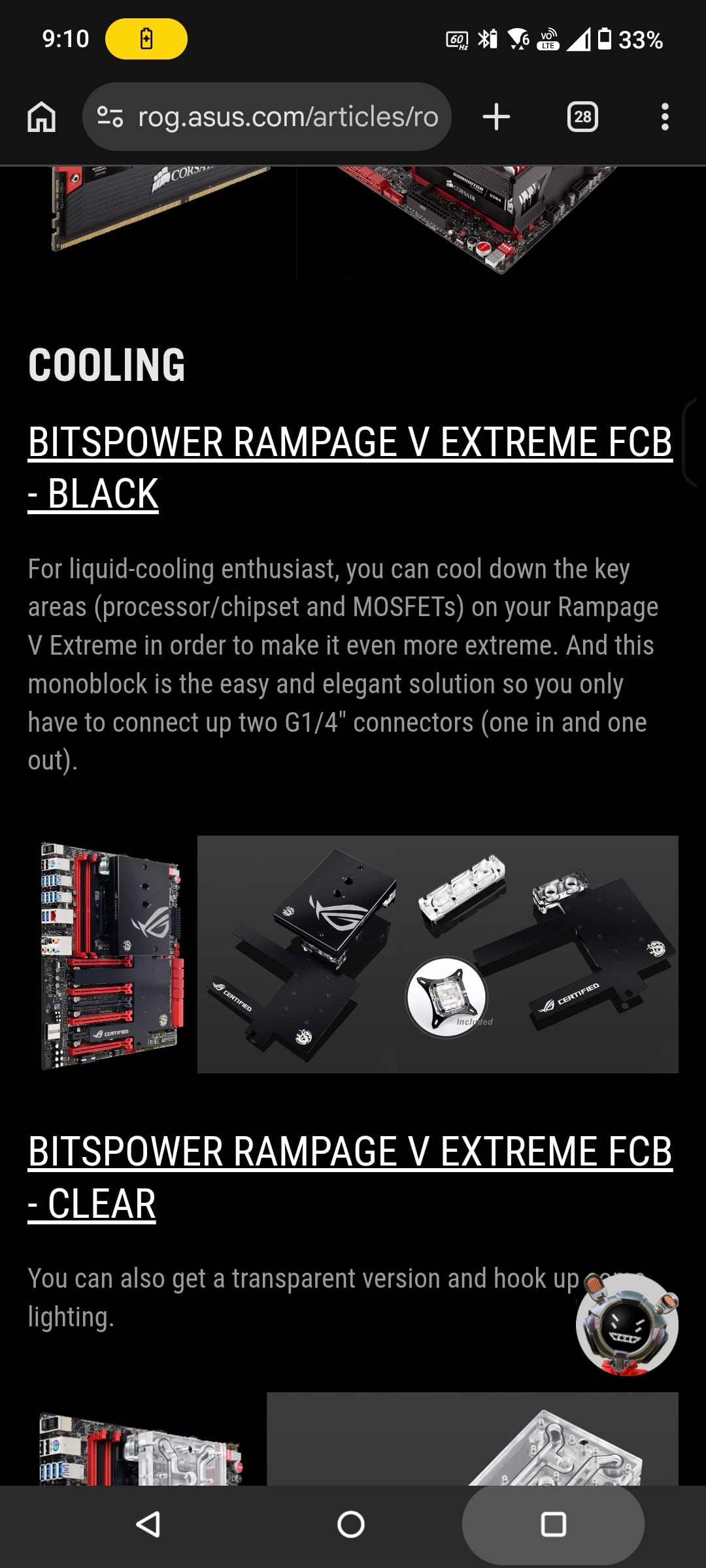
Then I found my exact block featured on the ASUS ROG website — in an official article titled “ROG Certified Army Growing Stronger”, published December 20, 2016.
A bundle I bought thinking it was a dead board turned out to contain a certified collector’s piece from a program that no longer exists.
What ROG Certified Actually Was
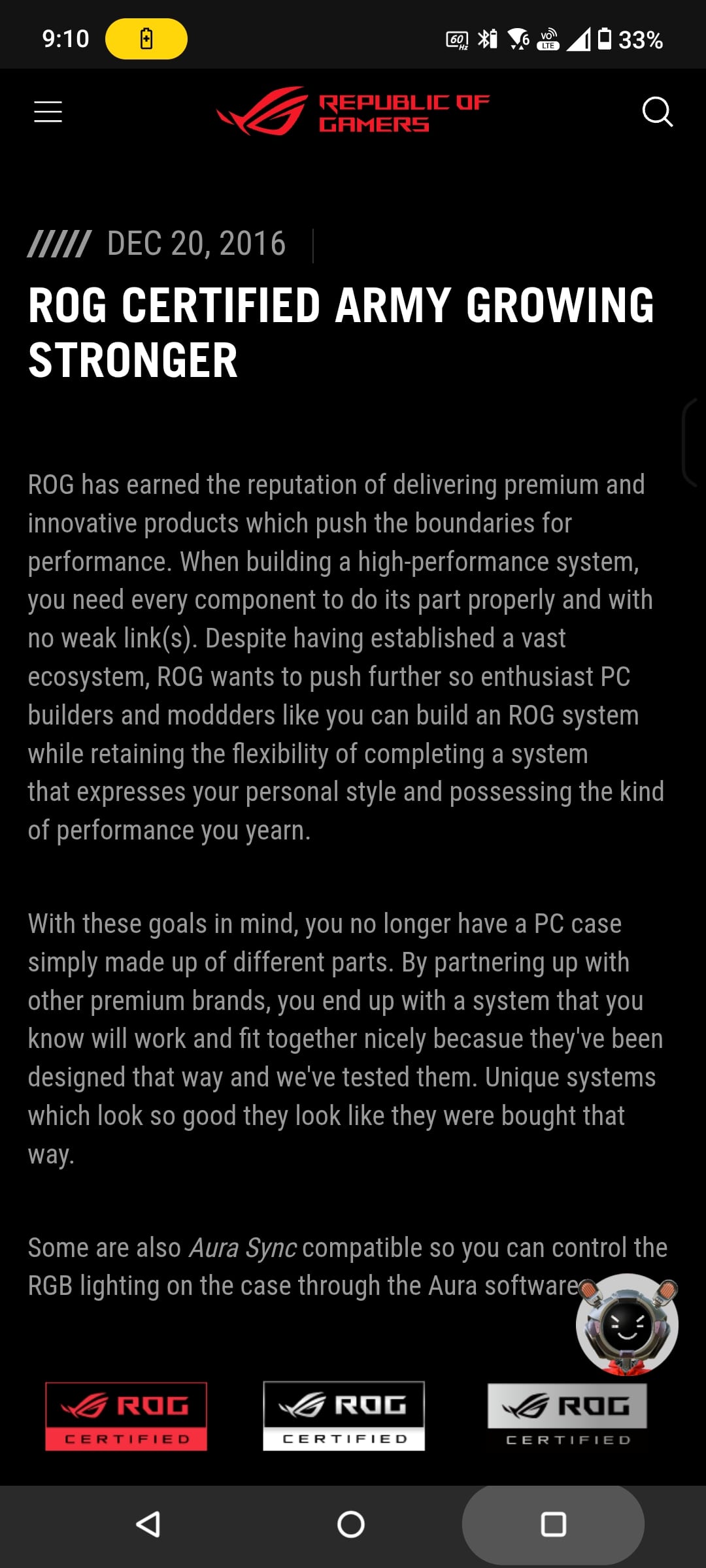
ROG Certified wasn’t a compatibility label. It wasn’t a marketing sticker brands could apply to themselves.
It was a formal validation program run by ASUS where third-party manufacturers submitted products to be tested and approved by actual ROG engineers. Every product that passed had to carry the ROG Certified logo on the product itself and on the packaging — that’s why the engraving is on the acrylic, on the metal, and on the PCB. The certification was physical. You could look at any piece in the ecosystem and know immediately it was part of it.
The program started appearing publicly in 2015. The earliest certified products were chassis: the Lian Li PC-Q17 (announced September 2015) and the In Win H-Tower (shown at Computex 2015 — a motorized, mechanically transforming case with a titanium variant estimated around $2,400). These weren’t budget products. The program was positioned at the premium end from the start.
By December 2016 — the same window when the Bitspower block was featured — the certified roster had expanded to cover three categories:
Cases: In Win H-Tower, In Win 509, In Win 805 Infinity, Lian Li PC-Q17WX, NZXT Noctis 450, DeepCool Gamer Storm Genome
Memory: Avexir Impact DDR4, Avexir Red Tesla (plasma tube lighting), Corsair Dominator Platinum ROG Edition
Cooling: Bitspower Rampage V Extreme FCB in Black (BP-ROGCR5EFCB-BK), Bitspower Rampage V Extreme FCB in Clear (BP-ROGCR5EFCB), EK-FB R5-E10 (fits the Rampage V Edition 10, not the original RVE)
That cooling list is complete. Three products. Total. In the entire history of the program. Two of them are colorways of the same block — the one I’m holding.
Many certified products also tied into Aura Sync, ASUS’s RGB lighting ecosystem. The program wasn’t just about engineering validation — it was an early push to build a unified ROG hardware ecosystem with third-party depth. Certified products from different brands were designed to work together visually and electronically.
The Block Itself
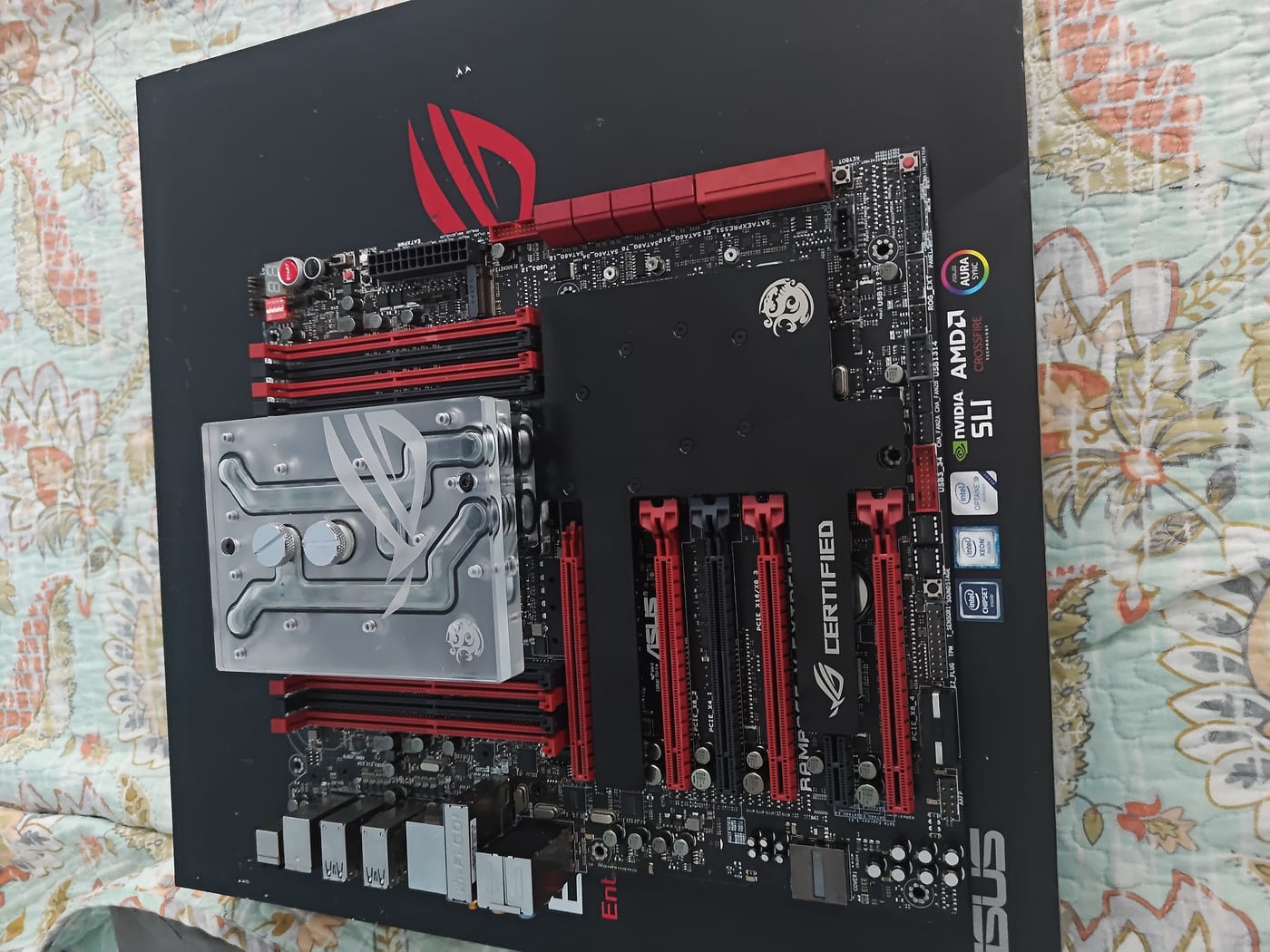
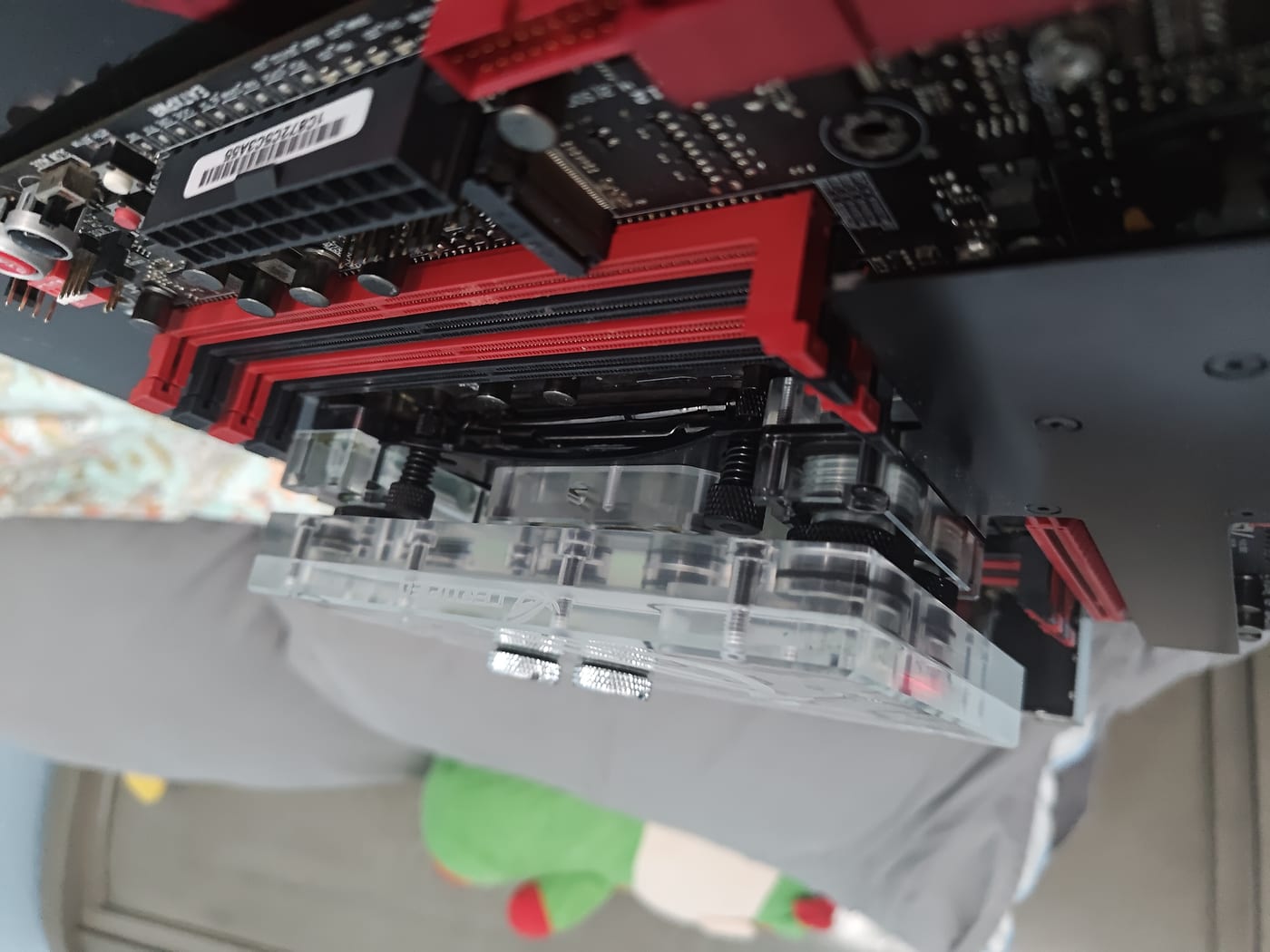
The BP-ROGCR5EFCB is a full cover monoblock. Single connected piece covering the CPU, X99 chipset, and MOSFETs/VRM sections. Copper base with a jet-type flow design, nickel plating, clear acrylic top with the ROG eye engraved directly into the plastic. Ships with six BP-MBWP-C90 fittings included. Two G1/4” ports total — one inlet, one outlet. One loop, full board coverage.
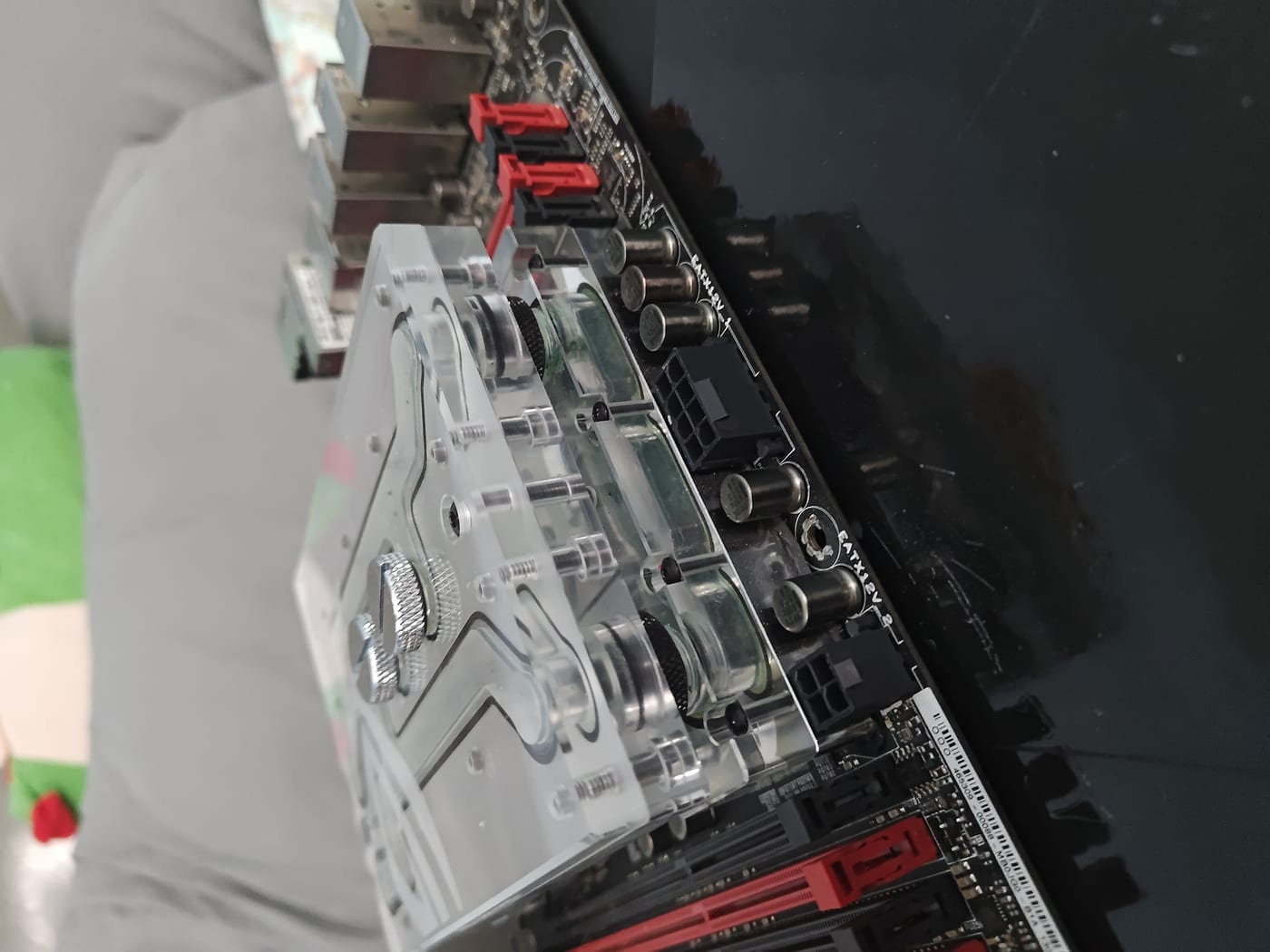
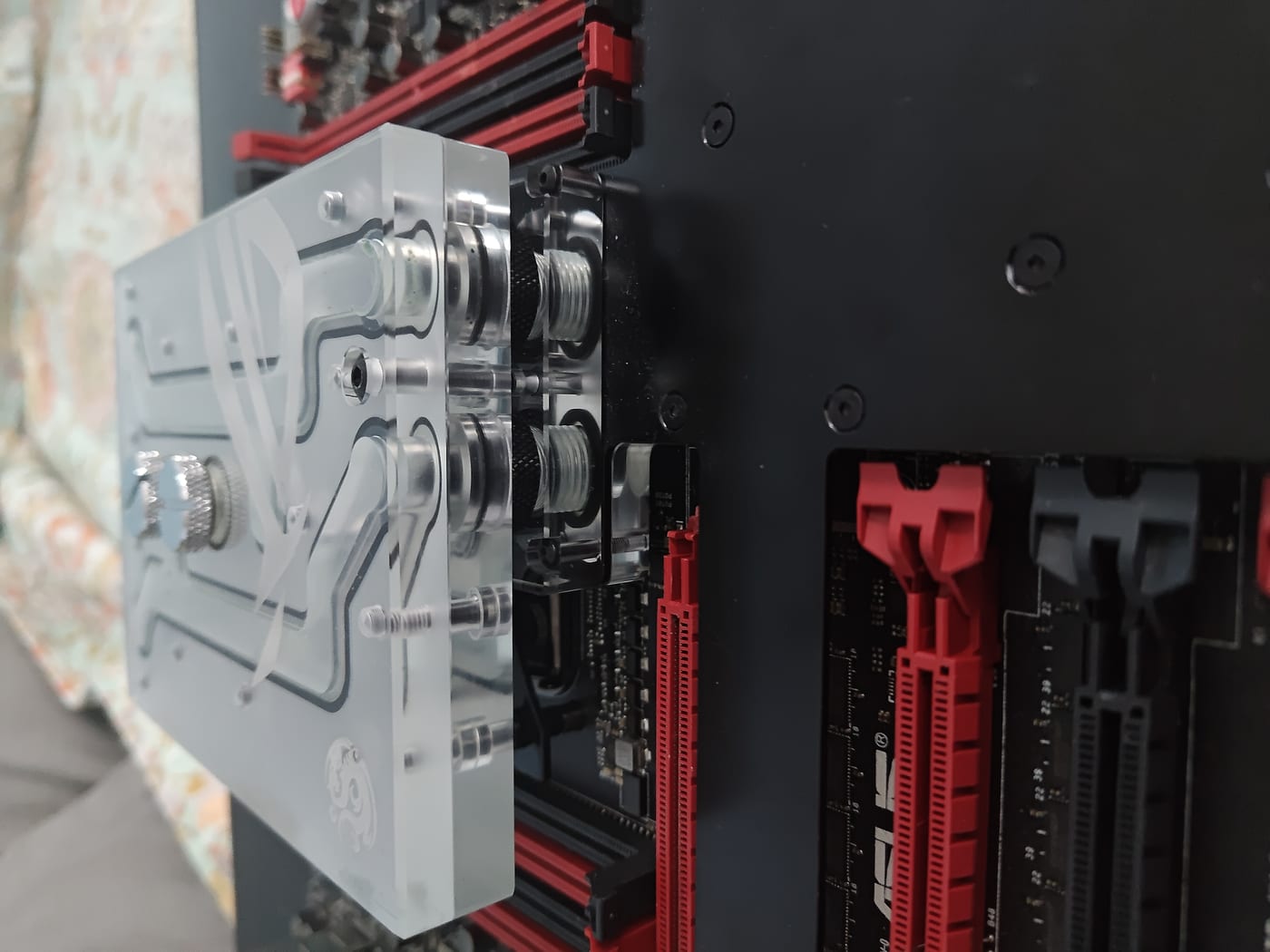
The block is listed as end of life on Bitspower’s site. Not discontinued last year — dead and gone, no successor, no restocks.
The Distribution Problem
Here’s the detail that makes this whole thing stranger.
Bitspower’s own product page for the BP-ROGCR5EFCB states it was available worldwide except North and South America.
This block was never officially sold in the US. It was never distributed here. Whatever import chain got mine from a manufacturer in Taiwan to a pawn shop in Washington state — that’s not a path ASUS or Bitspower set up. Someone brought it over privately at some point, it changed hands, ended up at a pawn shop, got listed as part of a bundle with a board that looked dead, and I bought it thinking the board was the value.
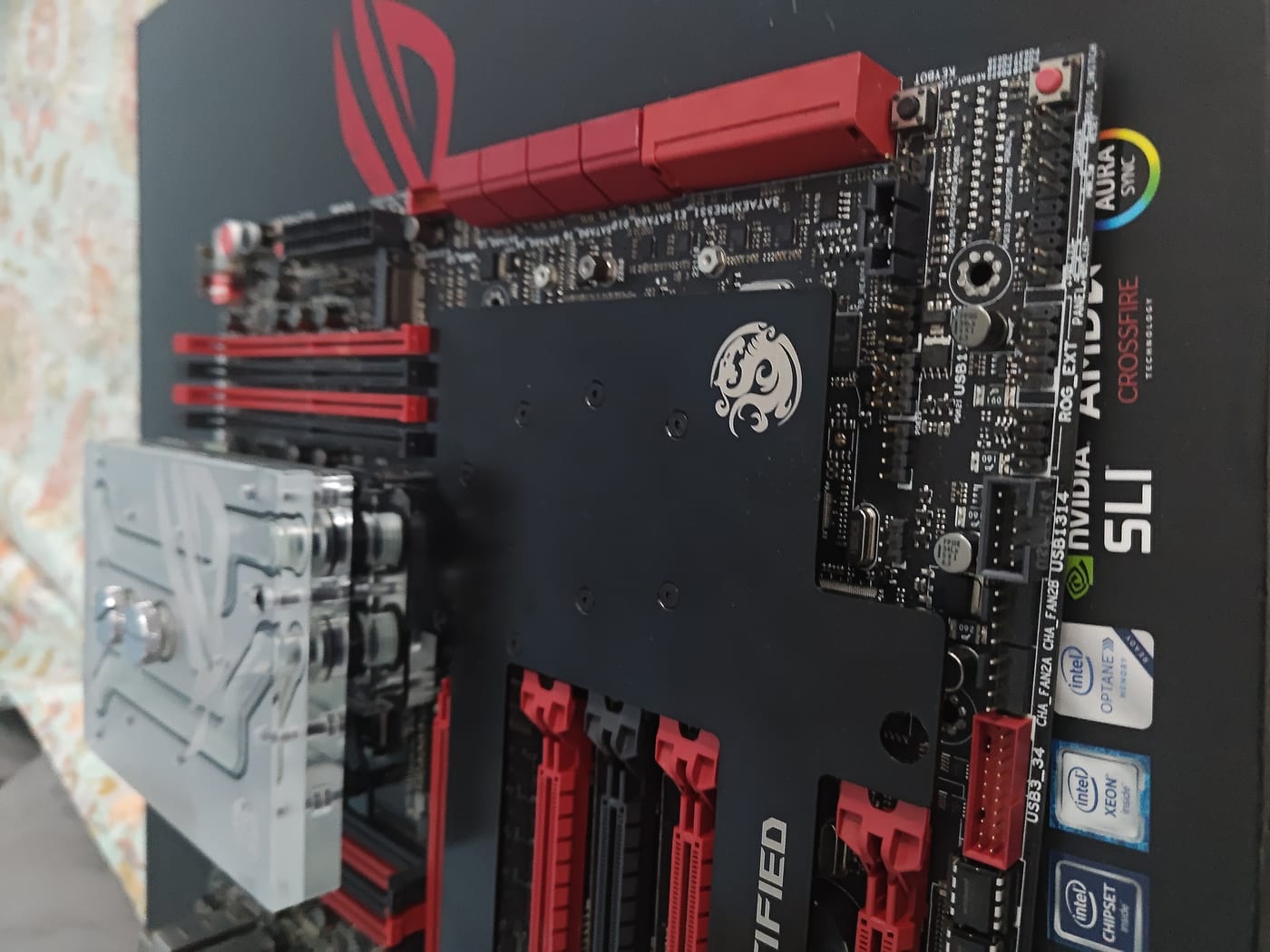
For context on how few of these exist in North America: the Rampage V Extreme was a ~$500 flagship board with a limited install base. Of those owners, only a fraction built custom loops. Of those, most bought EK or other mainstream options. The Bitspower block was a boutique ROG Certified collaboration with no North American distribution, split across two colorways (black and clear), produced in quantities that Bitspower never published.
My rough estimate — and I want to be clear these are my guesses, Bitspower never disclosed production figures — is somewhere in the low hundreds to maybe a thousand clear units produced worldwide. The number physically present in North America is probably in the double digits. The number on eBay with no comps, no sold history, and no price anchor is effectively one: the one I have.
The only adjacent data point I found was an EK monoblock for the same platform that sold for around $60 years ago. But the EK block is a standard production piece. Not an official ROG Certified collaboration. Not engraved. Not one of three cooling products in a formal ASUS program. They aren’t comparable.
What Happened to the Program
The ROG Certified program kept running after 2016. ASUS had promised more memory partners for 2017 — GEIL, Team Group, Apacer were mentioned. The case side continued through Lian Li: the PC-O11WGX in 2017 (~$319 MSRP, ROG front panel, Mayan etchings on the frame), the O11 WGX V2 at CES 2019, and the O11 Dynamic XL ROG Certified at Computex 2019 — co-designed with der8auer, with his signature cast into the glass.
Then the program went quiet.
Today, if you search “ROG Certified” on ASUS’s site, what comes back is a DRAM compatibility program — a memory qualification list for ROG boards. That’s it. The era of certified chassis, certified water blocks, and certified RGB memory kits built under a formal ASUS engineering partnership is over. The category is dead.
The three cooling products that ever carried the certification — two colorways of a Bitspower monoblock for a 2015 flagship board and one EK block for its ten-core variant — are all discontinued. No new certified blocks were ever added. The Bitspower pieces remain the only full-cover water cooling hardware in the history of the program.
Where This Ends Up
A water block that was never distributed in America somehow ended up in an American pawn shop. It got bundled with a board everyone thought was broken, which turned out to be completely healthy. It arrived in my hands in California, officially certified by ASUS, one of three cooling products in the entire history of a now-defunct program, with no sold comps, no restock, and no successor.
The 6950X is installed. The monoblock fits. The loop infrastructure is already there.
I’m not in a hurry.
Bitspower BP-ROGCR5EFCB — ROG Certified Full Cover Monoblock for ASUS ROG Rampage V Extreme, clear variant. EOL. No North American distribution. One of three cooling products ever certified in the ROG Certified program.
From Marks Finds